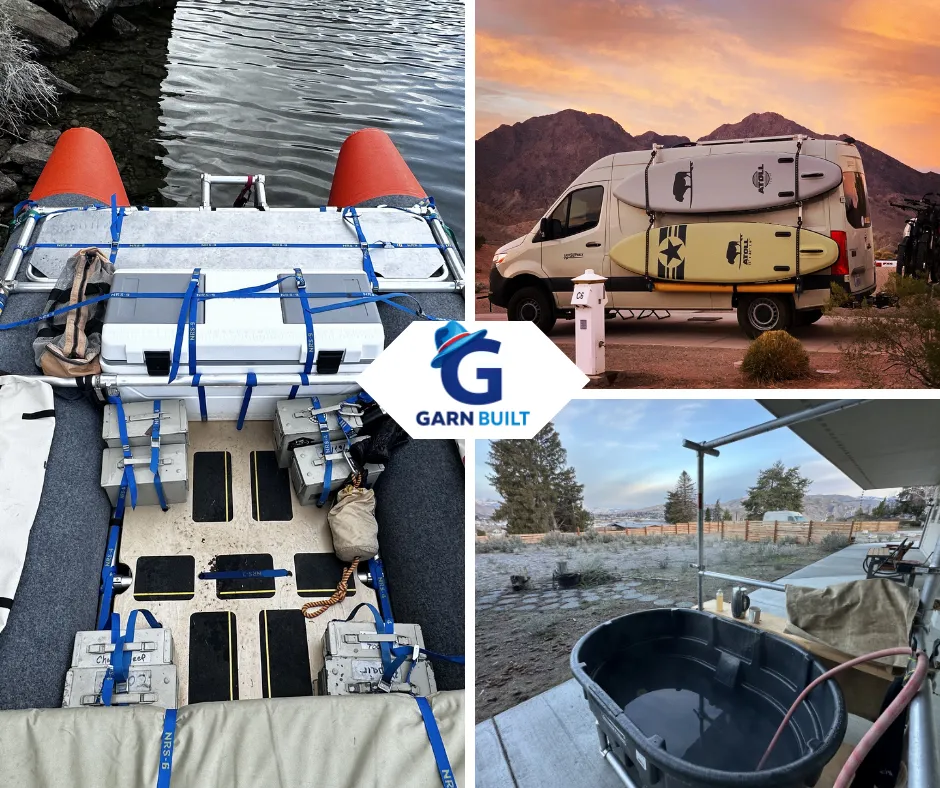
GARNBUILT Legacy Goal = 100+ years
Built for Function, Durability, and Value: The Back Story Behind GarnBuilt Design
Written by founder Garn Jr. Christensen
High on a ridge in the Kettle Mountain Range in the Northwest is a collection of public school buildings designed for outdoor education. Early in my working life, I had the opportunity to assist with the construction of this facility and was introduced to what the designers called legacy standards.
At the time, it was explained to me the goal was to build a facility that woul ill easily last 100+ years. This was done with a minimalist approach, yet also striving to have all major equipment systems be easy to maintain and upgrade when needed. This was similar to the standards for building national park lodges and other long-term public infrastructure.
My father, Garn Sr. was also a builder. In the 70s, he designed, developed, and constructed over 100 small family homes for soldiers returning from the Vietnam War. In addition, he developed products ranging from an air pollution tester, finance data entry system, to an air toy that shot potato plugs. Even today, you can buy a product at some sporting goods stores modeled after one that he and his older brother originally brought to market.
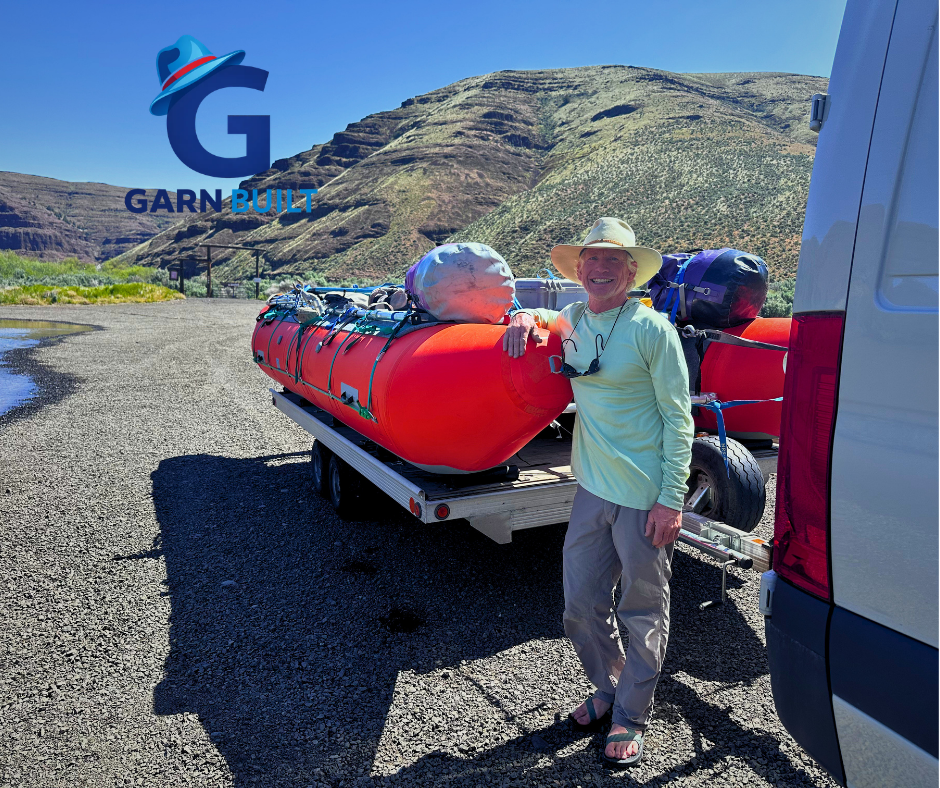
This was the world that I experienced as a child and teen. My summers were spent helping clean homes in newly developed sub divisions, filling in on construction crews, and packaging items for retail. Occasionally we would go on family rafting and fishing expeditions on the Green River that flows into NE Utah from SW Wyoming. The fishing was excellent, but what really captured my interest was the rafting and unique characters we met on and along the rivers.
Eventually my father gave up his land development and construction businesses to join the new age community movement of the 70s. During those years, I learned about hippies and intentional communities (communes), which my father was working hard to build in the remote mountains of Idaho.
As the decades passed, my father Garn Sr. continued to do a variety of interesting things including teaching outdoor survival to military pilots, recruiting engineers, and managing a wilderness outfitting business. He also found time to continue to build a creative community in the Idaho Backcountry. The community he originated evolved over time, but continues to exist for the friends and family that stayed involved.
Over these same decades, I continued to get river days each summer throughout the West. When not on the river, my occupation was a teacher as well as various leadership roles. One of my assignments during those years was being the owner’s representative for over 20 public school related construction projects, which was how I learned about legacy buildings.
On the river, I was often doing solo trips or rowing on private expeditions. Private expeditions are unique as each rafter brings their boat of choice, rather than rowing and rigging the rafts provided by an outfitter.
I found many private expedition boats often overloaded and not set up for easy rigging, surviving a flip or mishap, or for fast and efficient rowing. As a result, I started designing my own raft frames and transitioned to rowing big catarafts. My first priorities are always passenger safety and sun protection. As a result, I had one of the first rafts with a rowing area bimini. It is also important to me to have a sand, bug, mouse, and snake free bed at night and designed, built, and river tested rigged rafts with sleeping platforms for up to two people.
For over a decade, each spring a new frame and boat would emerge from my garage shop and the one from the prior year would go up for sale. The new rigged boat would be tested on a few summer river trips, then be sold. Each version was further refined for function, durability, and what I call wallet friendly (value). For me, value is what I can use that will get the job done for the lowest possible cost, and not assume function and durability always reflect long-term value.
Not being an expert at welding or bending pipes, I used a system for raft frames using industrial grade aluminum fittings holding together industrial grade aluminum tubing. Both are commonly used in factories, public pool diving decks, and both the marine and aviation industry. The beauty of the design is that there are no welds or custom bends, which also allows any damaged frame pieces to easily be replaced and repaired. In addition, the frame becomes completely adjustable for different load configurations and rowing preferences.
Other water sports were also always in my garage and shop. When my first 2006 Sprinter Van was being put into use, I reached out to a custom shop that made racks to carry glass panels on the sides of work vans. The owner had built a version for some surfers that also worked for stand up paddle boards.
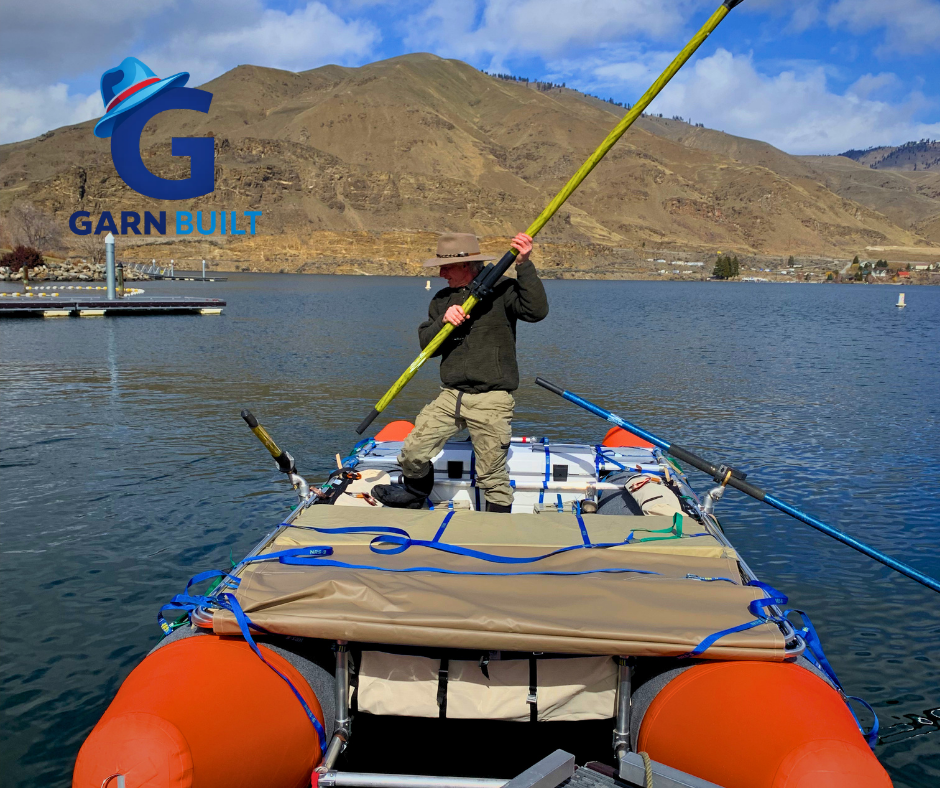
This builder designed and built my first side paddle rack, then helped modify my original rack to fit a 2007 Sprinter that used a different mounting system. In 2020, I purchased a 4wd cargo Sprinter to do my own camper build out. When the build was about done, I reached out to have him help me modify my mount for the new van. Unfortunately, he was no longer in business.
After lots of looking at my new van and my current raft frame, I came up with a new design that rather than use the 80/20 materials, I used the same pipe and fittings as on my whitewater frames. Once tested and weighed, I realized I had come up with a side van rack that was lighter, had less parts, and seemed to perform as well if not better than my prior rack.
Some regional young agricultural equipment engineers reviewed the rack. Their only suggestion was to stay with my fittings, not complicate the design with custom pipe bends, and then road test the rack in all possible conditions. My father was still alive at the time and suggested the rack be called an Easysuprack, since even he at 80+ could load a board on the bottom rests. Easysuprack continues to exist as the founding corporation for both GarnBuilt and Holda Kits.
My student’s advice led me on a journey where today’s version of the rack is the result of over 70,000 miles. The roads might be the 80 mph interstate through Wyoming, Utah, or Idaho, or doing 100 miles at 5 mph through Death Valley after coming over a Nevada mountain pass with six inches of snow, temps at - 7, and 20 mph crosswinds.
Every new refinement gets road tested prior to every updating the prior version. So far, the only loss of a board was at 60 mph. The cause was my error when in the excitement of a trip I forgot to attach the rubber tie down straps. Today’s version has lock bars, which makes this mistake even less likely.
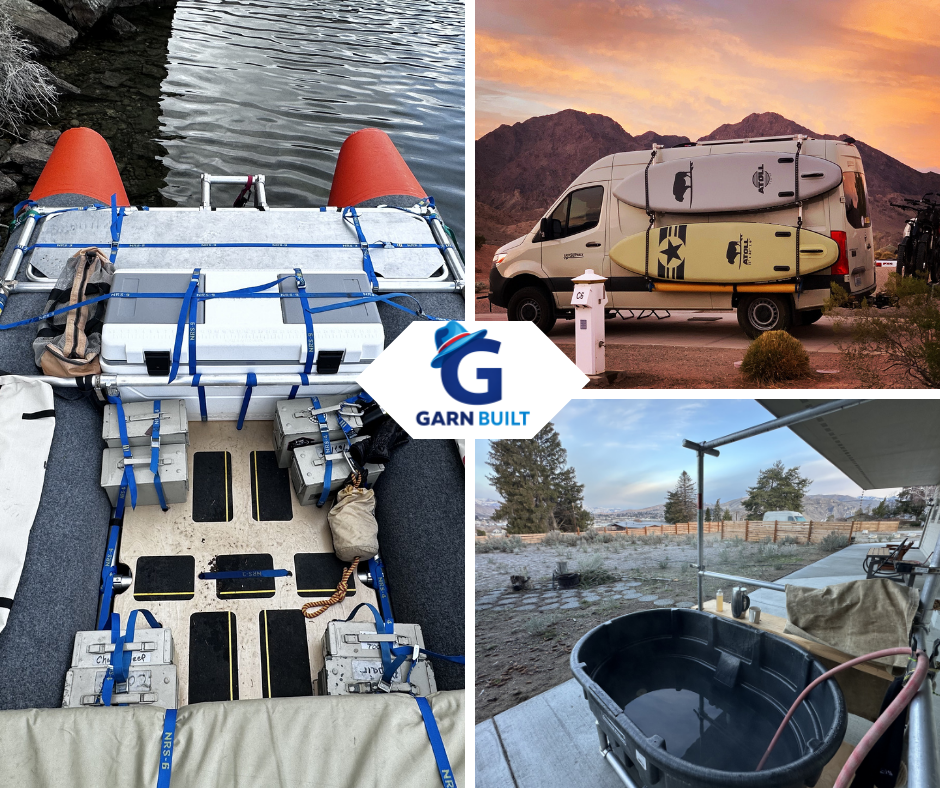
Over these same years, people would ask about my rack and they started selling. In fall of 2023, I bought an old farm to retire on and started looking for a business partner. In 2025, a young engineer / MBA joined me. He has since brought on another MBA. Between the two we now have GarnBuilt and HoldaKits, as well as the best version of the rack to date.
The result is a rebrand and me being tasked with development and testing, while my partner transitions to taking over all other operations as CEO.
The foundation of what I do is rooted in serious words like conservation, sustainability, reducing our carbon footprint, recycling, and reusing are things we think a lot about as we build Holda Kits that ideally help a human venture into wild and empty places, or do other things that make them smile. Ideally, the items from today’s Holda Kits are still around in 100+ years and in use by one of my grandchildren or great grandchildren.
Next month we will introduce you to some of our expedition rafts as well as a detailed look at our latest paddleboard / surfboard rack. Our newest design is a Holda Kit Solar Base Camp / Van Insert. We hope to have it ready to start road testing in 2027.